Zero is an interesting number. Standalone, it may not deliver the impact; however, when in an equation with another number, it can produce significantly different results. For example, it can turn the original number into zero or to infinity, keep it unchanged, or make it 1. Just the positioning of zero in the equation needs to change to bring out these variations in the result. So, zero is by no means insignificant.
In the context of climate, “Zero” carries tremendous traction. You may be familiar with terms such as climate change, climate action, and climate crisis. Anyone 40+ in age will tell you that the climate s/he experienced in their childhood was not this unpredictable and extreme. Every year we experience the summer temperatures going through the roof in many regions of countries in the Global South. While the Global North is mainly responsible for the GHG emissions, countries in the Global South are severely feeling the effects and consequences.
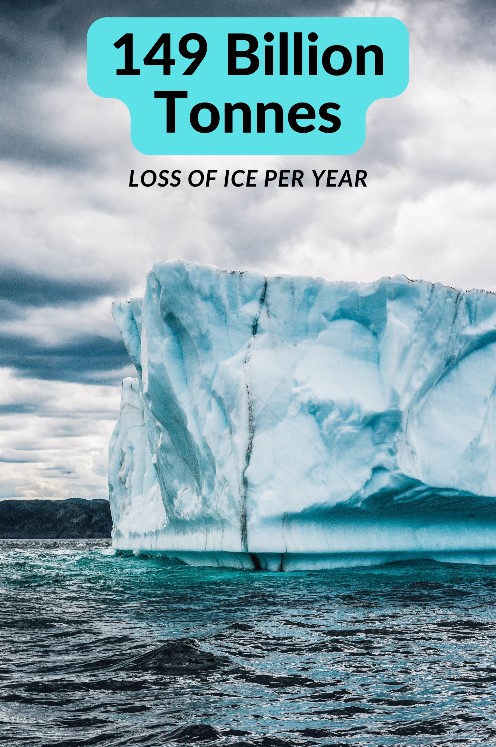 Around March 15, 2022, an ice shelf the size of New York City (1,200 square kilometres) collapsed in East Antarctica, an area long thought to be stable and not affected much by climate change. The collapse, captured by satellite images, marked the first time in human history that the frigid region had an ice shelf collapse. In Antarctica, the two-mile high (3,234 meters) Concordia station on that date was 10 degrees (-12.20 C), about 70 degrees warmer than average. According to NASA, Antarctica lost an average of 149 billion tonnes of ice annually from 2002 to 2020.
The Net Zero Ambition
The extreme climate events we experience are due to global warming. In 2015, as part of the Paris Agreement,the
Intergovernmental Panel on Climate Change (IPCC), suggested that by 2100 we need to keep the temperatures of this planet well below +20 C (ideally below +1.50 C) compared to pre-industrial planet temperatures. However, in the last 8 years, the Global Warming Index shows that the planet is approaching +1.30 C very fast.
Without concrete changes and progress, we will be passing the mark of 1.50 C within the next 10 years. With this rate, the global temperature will surpass 40 C to 50 C by 2100. This temperature increase will have catastrophic effects on the climate and our systems, including financial, societal, food, water, and health. In short, in many places the entire system will collapse.
To keep the temperatures within the suggested limits, Industries, Governments, and people are required to make an effort to reduce Green House Gas (GHG) emissions, measured as Carbon Dioxide Equivalents (CO2e). These Greenhouse gases stay in the Earth’s atmosphere for thousands of years. They trap the sun’s energy and will not let it escape, warming the planet. It’s like you are wearing a sweater all the time and every day, you add on one more sweater. Imagine how you would feel with all that heat trapped in.
Natural Carbon Sinks
We realize we cannot stop Industries, and we cannot stop human activities; but we can reduce the greenhouse gas emissions from these activities by making the right choices. Understandably, even those right choices will have some GHG emissions. Mother Earth has provided natural GHG gas sinks in the form of Trees, Soil, and Oceans; they have a certain capacity to absorb these gases out of the atmosphere. So, what if all human activities were limited to emitting only as much GHG emissions as the natural sinks can absorb? The net effect is ZERO additional carbon emissions than we already have in the atmosphere. We need just more than these natural sinks to suck the residual CO2 from the atmosphere. We need large-scale deployment of cost-effective low-carbon technologies, energy efficiency, demand reduction strategies, offsets, and carbon dioxide removal (CDR) methods. With scientific data backing, IPCC has requested nations and global Industry to reach this Net Zero state by 2050.
Progress
The good news
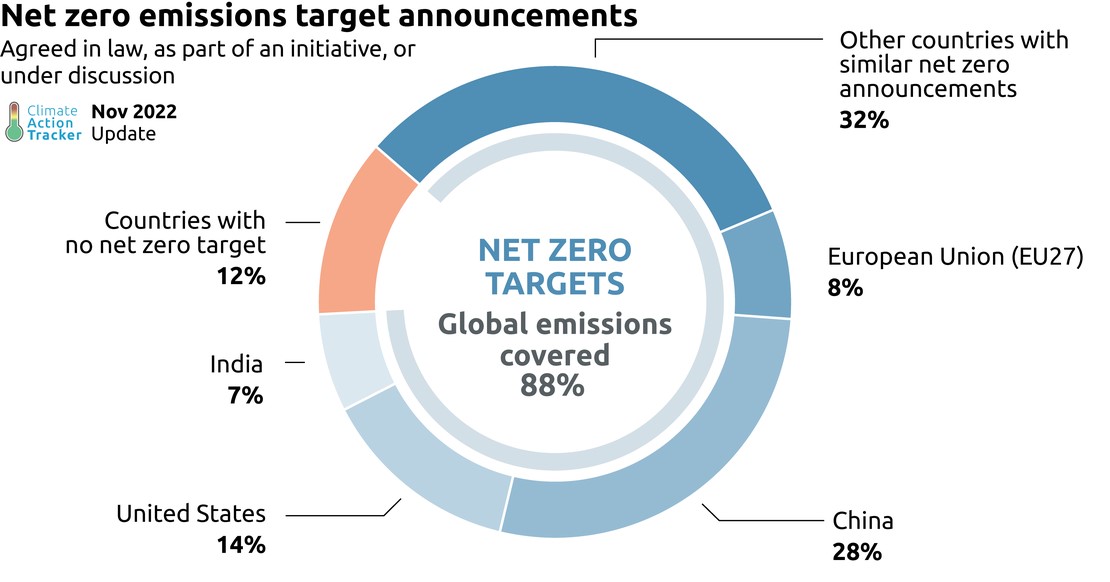
As of November 2022, 140 nations, which account for ~90% of the total emissions have announced Net Zero targets. However, different countries have different timelines for when they will get to Net Zero.
The following diagram is taken from ClimateActionTracker.org.
Private sectors have further taken up Net Zero targets. some industries are ambitious and ahead, while others are trying to reach the target. Limiting global warming to 1.5°C requires transforming almost all systems, from how we power our economy and build our cities to how we feed a growing population and manage our land.
The challenges we face
To reach Net Zero major transformation with firm actions is required. But these transformations are not occurring nearly fast enough. Getting on track to achieve 2030 targets will require an enormous acceleration in the effort and an accurate way to track and compare all data. The following table shows our progress since 2015, based on the data released by climateactiontracker.org
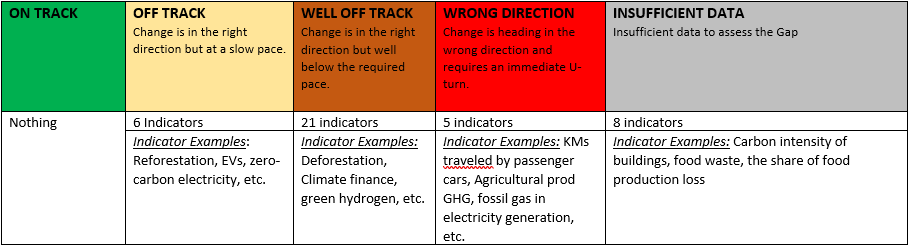
You can read the complete scorecard by downloading the ‘State of Climate Action 2022’ report.’
Also, recently published This Synthesis Report (SYR) 2023 of the IPCC Sixth Assessment Report (AR6) summarises the state of knowledge of climate change, its widespread impacts and risks, and climate change mitigation and adaptation.
Stubborn optimism
While things around us are not exactly positive, Christiana Figueres, the key architect of the Paris Agreement, insists we remain optimistic about the future and the changes we can bring. We, Politicians, Policy makers, Business leaders, and society in general, must work in tandem to secure the Net Zero goal and, in turn, secure the future of upcoming generations. We should ask for complete transparency about Net Zero and/or Emission Reduction plans, targets and milestones to our local politicians, to the leadership where we work, to the teachers where we study.
The Zero is our new Hero. Let’s be stubbornly optimistic about doing the right thing to meet our collective goal of Net Zero.
For more information
The popularity of Chat GPT has reached new heights. IPCC has launched Chat IPCC conversational Climate Chatbot to answer your questions, including the one this blog discusses.